

Under-Eye Filler: What to Do About Dark Circles
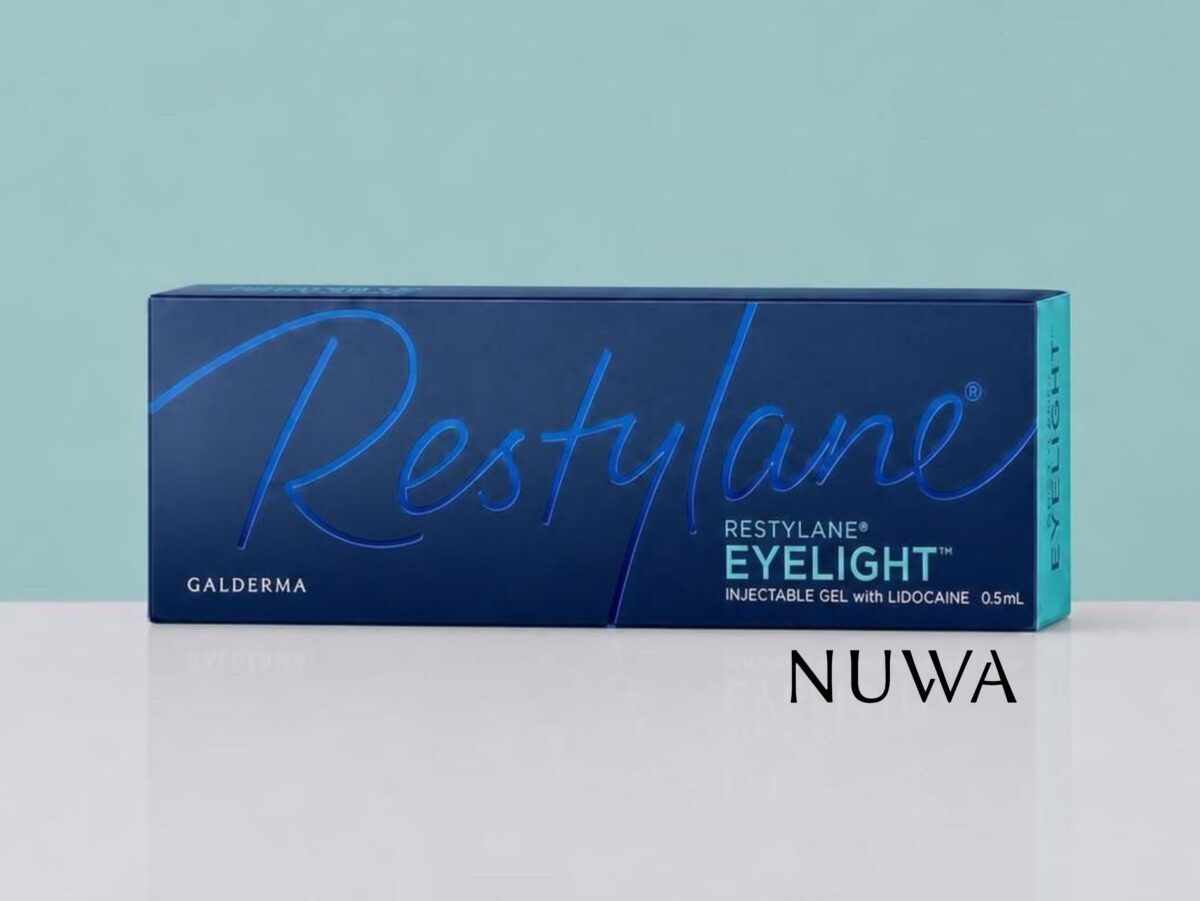
Dark circles make-up cannot cover are a problem of shape, not colour. NUWA Clinic Gangnam on tear trough hollowing, dedicated eye-area formulations and layered placement.
Contents
There are days when you slept well and feel fine, yet keep being told you look tired.
Sometimes, however carefully you apply concealer, the darkness under the eyes stays where it is. In cases like these, the cause may not be pigment but the shape of the under-eye area. Today we will set out that distinction.
Dark circles come from two directions. One is skin that looks dark because of pigmentation or blood vessels showing through, and the other is a shadow falling into the hollow left as the under-eye fat layer thins. If make-up does not cover it, the second is the more likely. In that case the approach is not to cover the colour but to fill the hollow and restore a flat surface.
Which type are my dark circles?
Dark circles call for entirely different approaches depending on the cause.
| Type | How it presents | The direction considered |
|---|---|---|
| Pigmentary | The skin itself is darkened with a brown tone, and looks much the same under different lighting | Pigment management |
| Vascular | Vessels show through the thin skin with a bluish cast | Vessels and skin thickness |
| Structural (under-eye hollowing) | There is a hollow along the tear trough, deepening when light comes from above | Restoring a flat surface with volume |
To sum up, dark circles that make-up cannot cover are not a problem of colour but a problem of shape, created by light and shadow.
How does under-eye filler work?
Under-eye filler restores a smooth, flat surface by injecting a hyaluronic acid (HA) formulation into the hollowed area in fine amounts.
As the fat layer over the orbital bone beneath the eye thins with age or genetic influence, a valley-shaped hollow forms along the tear trough. When light falls from above that hollow, a dark shadow appears, and that is what reads as a tired look. Filling the hollow from below flattens the surface and the shadow fades. It is not a matter of removing pigment but of removing the conditions in which a shadow forms.
To sum up, under-eye filler is not a procedure that covers a dark colour but one that fills in the contour casting the shadow and returns the area to a flat surface.
Is a dedicated formulation used around the eyes?
The under-eye area has some of the thinnest skin on the face, with fine blood vessels and nerves threaded close beneath it.
Using a formulation intended for other areas as it is can therefore leave the skin looking bluish, or bring lumpiness or swelling with it. This is exactly why a dedicated formulation developed for the tissue characteristics of the eye area needs to be chosen.
The formulation used under the eyes at NUWA Clinic Gangnam is a hyaluronic acid type calibrated for treatment in the eye area. A manufacturing process that controls particle structure is applied to reduce swelling from water absorption, and it combines smoothness with cohesivity, which helps lower the degree of lumpiness or show-through beneath thin skin. It also contains lidocaine, a local anaesthetic, so discomfort during the procedure tends to be less.
To sum up, a dedicated eye-area formulation exists not because of a difference in performance but because its particles and viscoelasticity are set differently so that show-through and lumpiness do not occur in thin skin.
Why is the filler placed in divided amounts?
With under-eye filler, the process of adjusting depth and volume is what shapes the result.
Because the eye area is threaded with fine blood vessels, concentrating an excessive amount into one layer can leave a foreign sensation on expression or make the edge visible. The approach is therefore to divide the layers and place small amounts in each. The measure is whether the formulation stays continuous with your own tissue rather than sitting apart from it when you smile or make an expression. Being flat only at rest is not enough.
The quality of under-eye filler can be judged not by how much was filled but by whether the edge stays invisible as the face moves.
Is under-eye filler right for me?
- Those with a sunken under-eye area where the tear trough casts a heavy shadow
- Those often told they look tired because make-up does not cover it well
- Those concerned about lumpiness, swelling or show-through after treatment with a standard formulation
- Those looking for a conservative approach because under-eye fat repositioning surgery feels like too much
Where the cause lies in pigment or vessels, however, there is a limit to what filler can do. So even if the points above apply to you, diagnosis comes first. Under-eye filler suits cases where the darkness comes from a hollow rather than from colour.
What should be watched afterwards?
This is the period in which the formulation settles into the thin, delicate tissue around the eye, so care is needed for a few days.
- Fine bruising and swelling — these may appear from the day of the procedure and over the following one to three days, and mostly settle within a few days.
- No pressure — for about one to two weeks, avoid rubbing or pressing the eye area firmly, lymphatic massage and under-eye acupressure.
- Hot environments, alcohol and smoking — please avoid saunas, steam rooms and exercise that makes you sweat heavily for a few days.
If you notice show-through or lumpiness, or if swelling persists, please contact the clinic rather than judging for yourself. What is needed straight after the procedure is less active care than leaving the area alone while the formulation settles.
If a deep tear trough and shadowed under-eye area have been on your mind for a long time, it is worth first establishing whether the darkness comes from colour or from shape. At the consultation you are welcome to ask about the type distinction, whether a dedicated eye-area formulation is used, whether the placement is divided across layers, and whether the shape on expression is assessed as well. Once the cause is settled, the direction falls into place with it.
Healthy, resilient skin comes together when accurate information and consistent care are added to the treatment itself. NUWA Clinic Gangnam, which proposes a direction suited to your skin through one-to-one diagnosis, is located directly in front of Exit 7 of Gangnam Station, on the 3rd and 4th floors at 385 Gangnam-daero, Seocho-gu, Seoul.
Frequently asked questions
Q. Why can’t make-up cover my dark circles?
A. They are likely to be a shadow created by an under-eye hollow rather than pigment. Cosmetics that cover colour cannot remove a contour, so the shadow remains as it is when light falls from above.
Q. How long does under-eye filler last?
A. It varies from person to person with the type of formulation, the amount injected and metabolic rate. We advise on how long it holds and when to repeat after following how things progress.
Q. I am worried the area will look bluish. Will it be all right?
A. The skin under the eye is thin, so show-through can appear where the formulation and injection depth do not match. We use a dedicated formulation calibrated for the tissue characteristics of the eye area and place small amounts across divided layers, which lowers that possibility.
Q. Isn’t it painful, being under the eye?
A. The formulation contains lidocaine, a local anaesthetic, so discomfort during the procedure tends to be less. The eye area is sensitive, though, so how much is felt varies from person to person.
Q. How long does bruising under the eye last?
A. Fine bruising or slight swelling may appear from the day of the procedure and over the following one to three days, mostly settling within a few days. If it persists or worsens, please contact the clinic.
Q. When can I wear make-up afterwards?
A. It depends on the condition of the treated area. For one to two weeks, though, you need to avoid rubbing or pressing the eye area firmly, so easing off the pressure when cleansing is best.

NUWA Clinic Gangnam
Dermatology · Lead Director, NUWA Clinic Gangnam
With know-how built over 10 years and more than 120,000 procedures, I'll help you find the answer to your facial concerns.