
Potenza: Why the Same Device Gives Different Results

T-zone pores sit in the upper dermis and cheek scarring in the mid to lower dermis, so one setting cannot cover the whole face. NUWA Clinic Gangnam on Potenza tips and depth.
Contents
Enlarged pores, fine lines and an uneven surface left by past acne are a common concern. However carefully you look after your skin at home and however good the products, there is a limit to how far structural change can be reversed that way.
That is often the point at which people start looking into Potenza at clinics near Gangnam Station, and then hesitate again, because the reviews all say something different about the same device. Today we will set out where that difference comes from.
Potenza inserts fine needles down to the dermal layer and releases radiofrequency energy from the needle tips. Which tip is used and at what depth determines which layer is treated. Pores in the T-zone sit in the upper dermis while indented acne marks on the cheeks sit in the mid to lower dermis, so treating the whole face at a single setting is difficult. What to check at the consultation, then, is not the name of the treatment but the tip configuration.
How is Potenza carried out?
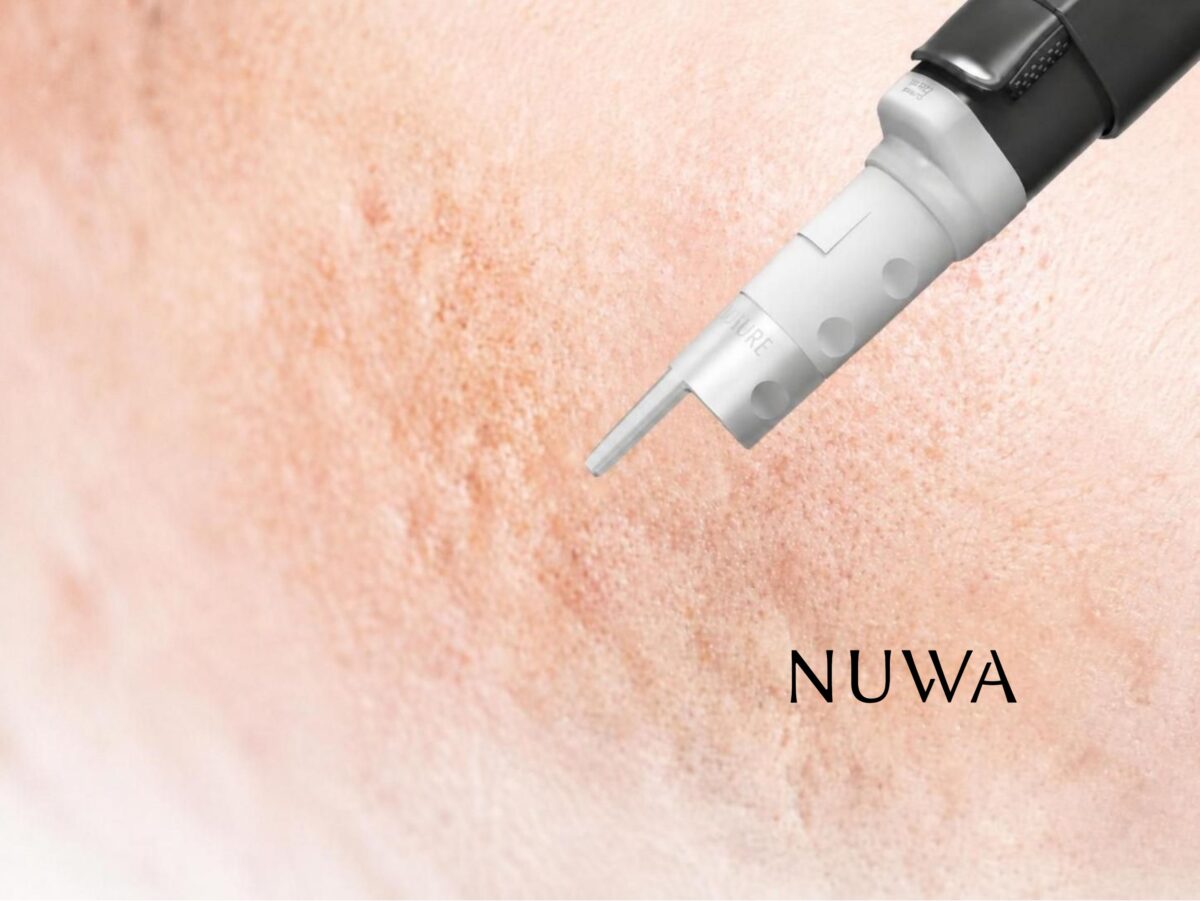
Potenza is a microneedling radiofrequency system that passes fine needles through the epidermis into the dermal layer and then releases radiofrequency (RF) energy from the needle tips in an instant.
Because the energy comes from within the skin, the burden on the surface can be kept lower. The heat delivered into the dermis coagulates loosened collagen fibres and prompts new collagen to form. In other words, Potenza is not a treatment that removes the surface but one that releases heat at the depth the needles reach.
Why is the depth varied by area?
Skin thickness and the depth at which a problem sits differ from one part of the face to another. Pores concentrated in the T-zone need precise work in the upper dermis, while indented marks left on the cheeks need access down to the mid and lower dermis.
Treating the whole face at one setting leaves one area under-treated and another over-treated. Where excessive energy enters thin, sensitive skin with a compromised barrier in particular, it can lead to redness or inflammatory reactions. What separates results with Potenza is not the performance of the device but whether depth and output were divided by area.
How are the Potenza tips divided?
Potenza has 14 dedicated tips that can be selected according to skin thickness, pore depth and the character of the scarring. Broadly, they fall into three groups.
| Tip type | How it works | Concerns it mainly addresses |
|---|---|---|
| Non-invasive | Delivers radiofrequency alone, without needles | Discomfort, tightening and tone |
| Single-row invasive | Selective access to vessels and red marks | Facial redness, red marks |
| Scar and pore | Delivers energy down to deeper layers | Stretched pores, indented scarring |
Choosing a tip is less a matter of choosing the type of concern than of choosing the depth at which that concern sits.
What is different about the pumping tip?
The pumping tip uses the pressure created as the fine needles enter and withdraw from the skin to push skin booster ingredients applied to the surface down into the dermal layer.
Ingredients applied to the surface often stay there, unable to cross the barrier. With the pumping tip, the renewal signal created by the radiofrequency and the skin booster ingredients meet in the same layer. The point of the pumping tip is not which ingredient is used but that it changes the depth the ingredient reaches.
What is worth thinking through before the consultation?
If you have several concerns, it helps to come with them in order of priority. Whether pores, scarring or redness is bothering you most right now changes both the tip configuration and the session plan.
- The one concern you would most like to address first
- The times or conditions under which your skin usually becomes sensitive
- Any recent treatments, and any active skincare products you are using
To sum up, what needs to be settled first at a Potenza consultation is not whether to have the treatment but the order of the concerns bothering you most right now. If something has not shifted with home care alone, that is worth mentioning too. We will start by checking which depth the problem sits at.
Healthy, resilient skin comes together when accurate information and consistent care are added to the treatment itself. NUWA Clinic Gangnam, which proposes a direction suited to your skin through one-to-one diagnosis, is located directly in front of Exit 7 of Gangnam Station, on the 3rd and 4th floors at 385 Gangnam-daero, Seocho-gu, Seoul.
Frequently asked questions
Q. Can Potenza address pores and scarring together?
A. They are often addressed together in one session by changing tips. The two concerns sit at different depths and need to be balanced, though, so which one is weighted more heavily is decided according to each person’s skin condition. The degree of improvement varies from person to person.
Q. Is Potenza very painful?
A. It depends on the tip used. There are non-invasive tips that deliver radiofrequency alone without inserting needles, so if discomfort is a concern, please mention it at the consultation. How much is felt varies from person to person.
Q. My skin is thin and sensitive. Can I still have Potenza?
A. Where the barrier is thin, excessive energy can lead to redness or inflammatory reactions. In that case the output and penetration depth are lowered in the plan, so letting us know at the consultation when and how your skin becomes sensitive is helpful.
Q. Is it better to have a skin booster alongside Potenza?
A. Using the pumping tip allows ingredients to be delivered into the dermal layer, so the two are often combined. Whether to combine them and which product to use depends on your skin condition, so please tell us about anything you are currently using.
Q. How many Potenza sessions are needed?
A. It depends on the type of concern and its depth. Smoothing texture near the surface and treating deeply indented scarring require different numbers of sessions, and renewal speed varies from person to person, so intervals are adjusted while following progress.
Q. What should I do if scabbing appears after Potenza?
A. Fine scabbing or a feeling of dryness may appear from two to three days afterwards. Do not pick at it; apply plenty of moisturising cream and let it come away naturally. It is also best to avoid saunas, scrubs and peels for about a week.

NUWA Clinic Gangnam
Dermatology · Lead Director, NUWA Clinic Gangnam
With know-how built over 10 years and more than 120,000 procedures, I'll help you find the answer to your facial concerns.