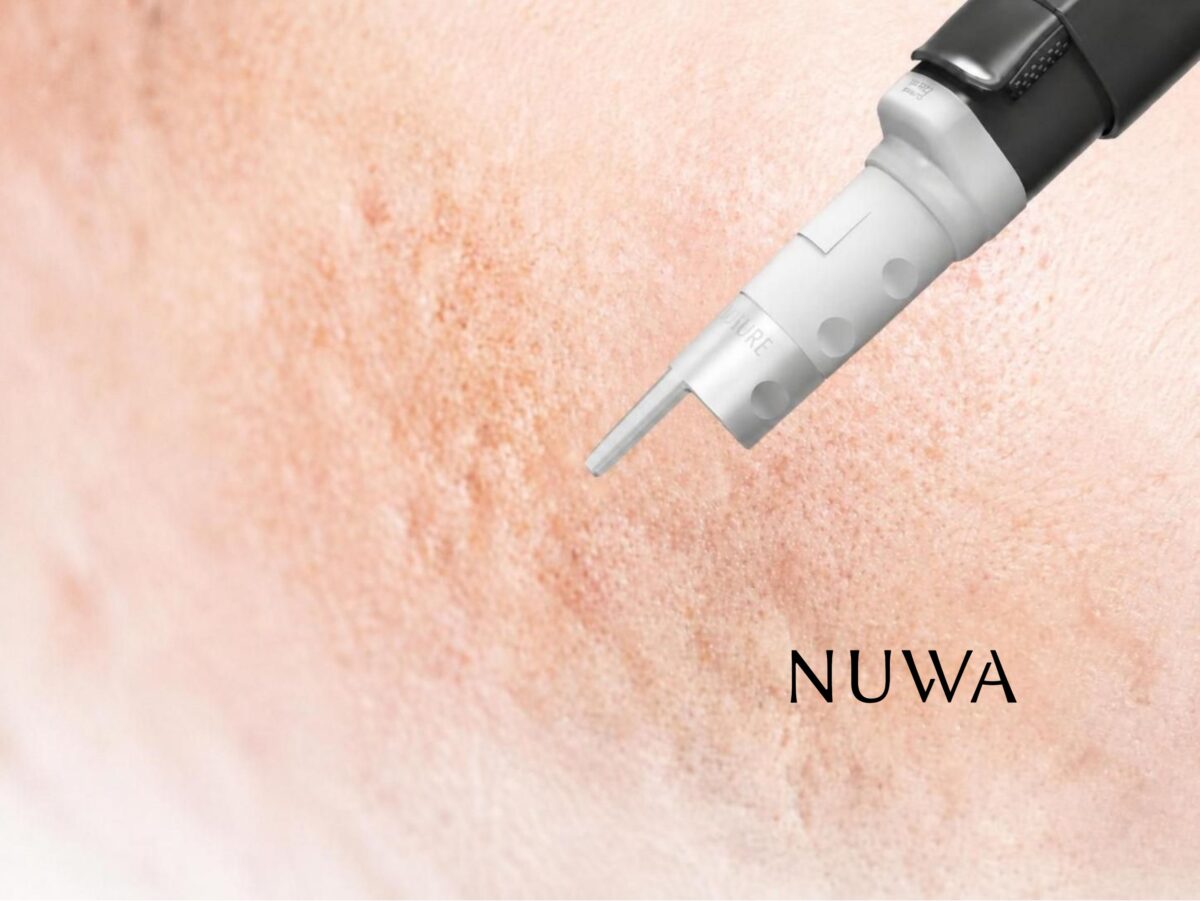

Removing Large Tattoos with Less Stress on the Skin

With large tattoos, higher total energy per session means more thermal stress. How NUWA Clinic Gangnam divides the area and spaces the sessions with PicoSure PRO.
Contents
A tattoo you once had done can start to feel like a mark you would rather cover as time passes and circumstances change. Many people decide to act on it ahead of a turning point such as a new job or a wedding, or when they want to deal with a design that has faded, blurred or simply dated.
Those with large designs covering the back or a whole arm, though, often hesitate for a long time before coming in for a consultation. Search for information and what comes up first tends to be talk of it taking years, or of scarring being left behind. Today we will set out how larger areas are approached at our clinic near Gangnam Station.
With large tattoos, the total energy delivered in one session is high and the ink density within the dermis is greater, so thermal stress and the burden of discomfort both increase. The approach is therefore to divide the area or increase the number of sessions in order to lower that burden. PicoSure PRO concentrates energy in picosecond units to break pigment into fine particles, and the finer those particles, the faster the body clears them.
How are tattoos removed?
Tattoo removal is not a matter of erasing pigment but of breaking it down. Laser energy is delivered to the ink particles embedded in the dermal layer, shattering them into pieces small enough for the body to clear on its own.
The broken-down pigment then leaves gradually through the lymphatic system. This is why you see the design fading over the following weeks rather than on the day itself. In other words, tattoo removal is a process of breaking pigment down to a size the body can carry out, and then clearing it.
What changes when the area is large?
A small piece of lettering and a design covering the whole back are entirely different propositions, even with the same treatment. A wide design means more total energy delivered in a single session, and a higher density of ink sitting within the dermis. The thermal stress and discomfort the skin has to take increase along with it. This is why wide designs are planned by dividing the area or adjusting the intervals between sessions, rather than treating everything at once, so that the burden of any one session is reduced.
To put it another way, the higher number of sessions for a large tattoo is not a sign of slow progress but a plan for spreading the burden on the skin.
What part does PicoSure PRO play?
The nanosecond (one billionth of a second) lasers used in the past had to apply heat for a relatively long time in order to break pigment down, which meant more of a burden on the surrounding tissue. Picosecond (one trillionth of a second) lasers concentrate energy into a far shorter moment, reducing the time heat has to spread.
The main 755nm wavelength of PicoSure PRO is well absorbed by melanin and tattoo ink in Asian skin. Because it responds selectively to pigment, it can reduce the unnecessary heat reaching surrounding healthy tissue. To sum up, 755nm is not a stronger wavelength but one that is well absorbed by pigment, which is why it is used to reach the same result with less burden.
Couldn’t you go stronger to reduce the number of sessions?
Some patients ask for higher energy in the hope of finishing sooner. Firing excessively high energy in rapid succession, however, can lead to hypopigmentation, where the skin turns pale, or to hypertrophic scarring, where the tissue raises. These changes can end up harder to remove than the tattoo itself. Adjusting the energy setting and wavelength to the type and depth of the pigment, and dividing the work across sessions, therefore tends to serve you better in the end. Raising the energy to cut the number of sessions can extend the recovery period instead.
How should the area be cared for afterwards?
Straight after the treatment, the area may look red and feel swollen or hot. This is a sign that the energy reached the target layer, and it usually settles within a few days.
- Leave the scabs alone — picking at them can allow secondary bacterial infection, leaving scarring or loss of pigment. Let them dry and come away naturally.
- Avoid alcohol and smoking — giving them a miss for about a week after the treatment helps recovery.
- Moisturise and use sun protection — both help protect the recovering skin barrier and prevent pigmentation.
When is a good time to come in?
If you have been putting it off because the design is large, simply having an overall plan often makes it feel more manageable. Once you know roughly how many sessions are involved, how long it will take and which area to start with, the vagueness clears.
There is no need to start straight away. Having a plan in place, though, means you can come back to it when the timing suits your preparations. We will start by looking at the colour and size of the design and when it was done.
Healthy, resilient skin comes together when accurate information and consistent care are added to the treatment itself. NUWA Clinic Gangnam, which proposes a direction suited to your skin through one-to-one diagnosis, is located directly in front of Exit 7 of Gangnam Station, on the 3rd and 4th floors at 385 Gangnam-daero, Seocho-gu, Seoul.
Frequently asked questions
Q. Can a tattoo covering the whole back be removed?
A. A wide area can be approached, but rather than treating all of it at once, we divide the area or adjust the intervals between sessions. As the total energy delivered in one session rises, so do thermal stress and discomfort.
Q. How many sessions does tattoo removal take?
A. It depends on the size and colour of the design, the ink density and when it was done. The speed at which pigment clears also varies from person to person, so intervals and numbers are adjusted while following progress. We will map out an approximate plan together at the first consultation.
Q. Are older tattoos easier to remove?
A. Ink does fade over time in some cases, but in others it has settled deeply and is harder to reach. Age alone is difficult to judge by, so we check the current colour and depth before making a plan.
Q. I am worried about scarring.
A. The approach is to concentrate energy in picosecond units and reduce the heat reaching surrounding tissue. That said, using excessive energy all at once can lead to hypopigmentation or hypertrophic scarring, which is why a plan that divides the work across sessions matters.
Q. Does the treated area need to be bandaged?
A. The guidance differs by area and extent. Wide areas rub easily against clothing, so protection is sometimes needed. We advise on this individually after seeing how the area looks following treatment.
Q. Can I exercise after tattoo removal?
A. Before the scabs come away, sweat and friction can both act as irritants, so some adjustment is needed. It depends on how recovery is going, so please go by the timing you are given after the treatment.

NUWA Clinic Gangnam
Dermatology · Lead Director, NUWA Clinic Gangnam
With know-how built over 10 years and more than 120,000 procedures, I'll help you find the answer to your facial concerns.