
Ultherapy PRIME: Finding the Right Level Before You Book

Side effects in ultrasound lifting come from energy straying beyond the target layer, not from too little of it. How NUWA Clinic Gangnam sets depth on real-time ultrasound imaging.
Contents
There is one thing patients sometimes say during a consultation: “Since I’m having it done anyway, please go strong.”
The feeling behind it is easy to understand. You are giving up time and money, so you want to see a clear change. With lifting, though, this request can take you in the opposite direction to the one you want. Today we will look at why that happens, and at how the right level for you is found.
Ultherapy PRIME is a lifting treatment that delivers ultrasound energy down to the SMAS (fascial) layer. If that energy strays beyond the target layer, however, the surrounding fat tissue contracts along with it, and the hollowing commonly described as cheek hollowing can appear. What matters more than intensity is the right level for your own skin thickness and fat volume, which is why the layers are checked on real-time ultrasound imaging as the treatment is carried out.
Isn’t it better to have Ultherapy done at a stronger setting?
Ultrasound lifting works by creating thermal coagulation points in the SMAS (fascial) layer that supports the skin, so that the tissue contracts. The question that matters here is whether that heat stops precisely at the fascial layer.
Where the energy is excessive, it passes beyond the target layer and the surrounding fat tissue is affected as well. When fat contracts, the face looks hollow rather than lifted, and that state is not easy to reverse. Burns and temporary nerve irritation arise for the same reason. In other words, side effects in lifting mostly come not from too little energy, but from energy straying beyond the target layer.
What exactly is cheek hollowing?
Cheek hollowing refers to a state in which subcutaneous fat in the cheek area reduces and the area appears sunken. Even where sagging improves, losing volume at the same time can leave the face looking gaunt or give an older impression.
This is particularly the case for those who naturally have little cheek fat and a thin dermis, because the distance between the fascial layer and the skin surface is short, making the fat layer easier to affect even at the same settings. Put simply, cheek hollowing is the sunken appearance that shows up when the volume providing support is reduced along the way as the face is being lifted.
How is the right level found?
Dermal thickness, fat distribution and the depth of the fascial layer differ from person to person. Rather than applying a set value as it is, then, the layers of your own face need to be checked immediately before the treatment.
The real-time ultrasound imaging built into Ultherapy PRIME allows skin layer thickness, fat distribution and the position of the fascial layer to be checked on a monitor as the treatment proceeds. Seeing them on screen is what allows the 1.5mm, 3.0mm and 4.5mm transducers to be matched to the depth required. The right level is not a number decided in advance, but a value set differently for each area while the layers are being checked during the treatment.
Who is this treatment well suited to?
| If this is your concern | The direction considered |
|---|---|
| A blurred jawline and jowls forming | Approaching the supporting structure, focusing on the fascial layer |
| Wanting resilience without an artificially pulled look | A plan centred on collagen remodelling |
| Little cheek fat and concern about hollowing | Adjusting depth away from thinner areas |
| Nasolabial folds and resilience around the eyes | Applying separate transducers by area |
To sum up, Ultherapy PRIME suits not so much those who want a dramatic change as those who want a plan matched to the conditions of their own tissue.
What is worth asking at the consultation?
Before deciding on the treatment, it is worth checking the following three points.
- Whether your skin thickness and fat volume are checked before the treatment
- Whether the depth is set differently by area, or the whole face is treated at one setting
- How areas with little cheek fat are to be handled
Lifting takes place in deep layers you cannot see, which leaves little for you to verify from where you are sitting. That is exactly why anything you are unsure about is worth raising before you start. It is not an awkward request but a perfectly reasonable check. If you would like to compare it with the other lifting options first, our lifting guide sets them out together. We will go through what level suits you at the consultation.
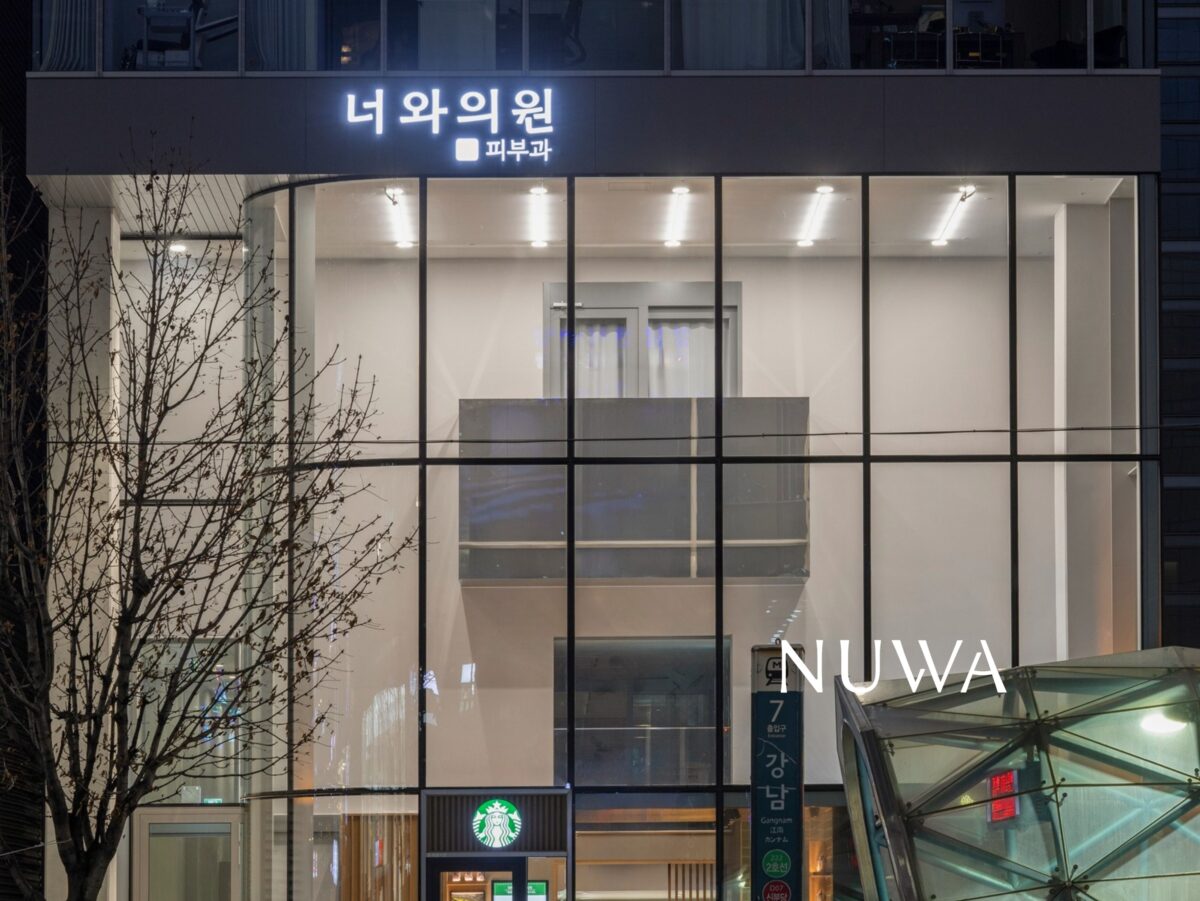
Healthy, resilient skin comes together when accurate information and consistent care are added to the treatment itself. NUWA Clinic Gangnam, which proposes a direction suited to your skin through one-to-one diagnosis, is located directly in front of Exit 7 of Gangnam Station, on the 3rd and 4th floors at 385 Gangnam-daero, Seocho-gu, Seoul.
Frequently asked questions
Q. I have very little cheek fat. Can I still have Ultherapy?
A. Yes, though the plan needs care. Where cheek fat is limited and the dermis is thin, the fat layer is more easily affected, so thinner areas are treated at a reduced depth or avoided. The layers are checked on real-time ultrasound imaging as we go, so please mention it at the consultation.
Q. If cheek hollowing occurs, can it be reversed?
A. Lost fat volume is difficult to recover naturally, so preventing it from the outset matters more than reversing it afterwards. Where hollowing is already present, it is worth also considering approaches that restore volume.
Q. Can I ask for the maximum intensity?
A. We would not recommend it. Excessive thermal stimulation beyond the target layer can lead to cheek hollowing, burns or temporary nerve irritation. Finding the right level that your tissue can take, rather than pushing the intensity, tends to lead to a more stable outcome.
Q. What exactly is the SMAS layer?
A. It is a thin fibrous membrane lying between the subcutaneous fat layer and the muscle layer, acting as the central axis that holds the resilience of the whole face. As this layer loosens with age, the fat and skin covering it descend along with it.
Q. If it hurts during the treatment, can the intensity be lowered?
A. Yes. Adjustments can be made as we go. Pain is felt differently by different people, so there is no need to endure it. That said, pain alone is difficult to judge energy levels by, so the adjustment is made together with checking the layers.

NUWA Clinic Gangnam
Dermatology · Lead Director, NUWA Clinic Gangnam
With know-how built over 10 years and more than 120,000 procedures, I'll help you find the answer to your facial concerns.