
Treatment by Facial Shape: Peanut, Square and Round
Peanut, square and round facial shapes: how Dr Song of NUWA Clinic Gangnam traces each to its cause, and why a cheekbone is not always something to reduce.
Contents
Hello. This is Dr. Song Myung-seung of NUWA Clinic Gangnam, where we assess the concern before the treatment.
Many people arrive at the clinic with a treatment name in hand, but many also describe an impression: “I’ve developed cheek hollowing and my face has become peanut-shaped”, “my face is too round”, “my lower face line is a source of stress”.
These descriptions are in fact very important clues. Finding where that impression comes from determines which facial shape the concern originates from, and once the cause of the facial shape is determined, the treatment that fits is determined too. Today I will organise three concerns I hear often by facial shape, and go through how each is approached.
Why does the peanut shape occur?
The peanut shape is a form in which only the cheekbone protrudes to the side while the cheek below it draws in, making the middle of the face look pinched.
The standard many people hold in mind is a smooth oval — a line that falls gently from the forehead to the chin. But when the cheekbone protrudes and the area below it sinks, a curve appears in the line. So with this type, the prominent cheekbone is a concern, but people often mind the line not falling smoothly even more.
The peanut shape, when soft tissue is the cause
Where it is not bone but thick tissue covering the cheekbone, I look at the direction of tidying that tissue with the cheekbone contouring injection.
There is something often misunderstood here. Cheekbones do not reduce with a contouring injection. A contouring injection dissolves places where fat has gathered, such as the jaw or cheeks, so it is of a different character from cheekbone tissue. Cheekbones therefore need a separate approach. In practice, there was a patient whose facial line became considerably softer as the outer cheekbone volume was tidied after a cheekbone contouring injection — a case where soft tissue was the cause.
The peanut shape, when bone is the cause
Where the cheekbone itself has developed, there are limits to reducing the cheekbone with an injection.
In that case the approach changes completely. If the protruding cheekbone cannot be shaved down, I look instead at filling the sunken area below it to connect the line smoothly. That means filling the lost volume with filler, or raising volume gradually with a collagen booster. It is an approach that creates a flow closer to an oval by filling in the curve, rather than reducing the cheekbone.
There are also many cases where cheek sagging causes the area below the cheekbone to drop, making the curve look more pronounced. Here I look at lifting the cheek to connect the line.
Is a cheekbone always a bad thing?
The cheekbone also acts as something like a pillar supporting the midface.
When cheekbones come up, many people think of them as something that must always be reduced. But the cheekbone is also the structure that keeps the cheek volume and tissue covering it from descending. So reducing the cheekbone excessively can weaken that support, and cases arise where the cheek volume drops and the face instead looks more sagging. That a face with cheekbones tends to sag later is also thanks to this supporting structure.
So I do not look at cheekbones as something always to be reduced. I look first at whether this cheekbone is harming the line, or supporting the face.
The square shape, a face where the lower part looks heavy
The square shape is a type where the face looks angular because the line at the side of the jaw is wide, rather than the chin itself.
Where the masseter, the chewing muscle, has developed, reducing the muscle size with square jaw botox can help. If the side of the jaw feels firm when you clench, this may apply.
Where fat under the chin or in the lower cheek covers the jawline, I look at tidying the fat. As it is not muscle, botox does not change it much. Where cheek and perioral tissue has descended and rests on the jawline, making it look angular, I address the sagging first with lifting.
In practice, there was a patient who had square jaw botox for over a year with the jawline unchanged. The masseter had already reduced sufficiently, and what was actually covering the jawline was sagging and fat.
The round shape, a face that looks circular
The round shape is a type where the whole face looks circular and full, and fat is often the cause.
Where there are places fat has gathered, such as the deep cheek or under the chin, I look at tidying the fat with an injection or addressing the line together with lifting.
That said, there are also cases where it is genuine swelling, or where the state of the facial muscles makes it look round. The approach differs according to whether fat can be felt when pinched, and whether there is a large difference between morning and evening. So confirming whether it really is fat comes first.
Facial shapes are mostly mixed
Not many people fall into exactly one type.
The cheekbone protrudes but there is sagging as well; the lower face is heavy but there is fat too. Mixed cases like this are far more common. So rather than settling on a facial shape name first, I look at which cause is acting most strongly at the moment. Where necessary I check the tissue structure with 3D MetaView. The order of treatment can only be set once the order of causes has been.
This is also why we hold both injection treatments and lifting devices across the board. If only one treatment is possible, every face ends up being explained by that treatment. Being able to suggest an injection to someone whose cause is soft tissue, lifting to someone whose cause is sagging, and volume to someone whose cause is hollowing, is what produces an answer matched to the cause.
Please start with that impression
You do not need to arrive with a treatment already decided.
Whether the line is uneven, whether the impression looks strong, whether the face is round. Just tell me that impression, and I will help you find which facial shape the concern originates from and what the cause of that facial shape is.
This has been Song Myung-seung of NUWA Clinic Gangnam, where we assess facial shape concerns first. NUWA Clinic Gangnam is located directly in front of Exit 7 of Gangnam Station, on floors 3 and 4 at 385 Gangnam-daero, Seocho-gu, Seoul.
Frequently asked questions
Q. How can I tell which type my facial shape is?
A. Looking in the mirror alone makes it hard to know the cause. Facial shape is the form visible on the outside, and the treatment direction is determined by the cause that created that form, so an assessment is needed.
Q. What treatment should a peanut-shaped face have?
A. Where the tissue over the cheekbone is thick, I look at the cheekbone contouring injection. Where bone is the cause there are limits to reducing it with an injection, so I look at filling the sunken area to connect the line. Where cheek sagging makes the curve look pronounced, I look at a lifting direction.
Q. Can reducing the cheekbone make the face sag?
A. The cheekbone is also a supporting structure for the midface. Reducing it excessively can weaken that support and cause the cheek volume to drop and look more sagging, so reducing is not always the answer.
Q. If the facial shape is the same, can the same treatment be had?
A. No. Even within the same type, the treatment that fits differs according to whether the cause is bone, soft tissue, muscle or sagging.
Q. I had square jaw botox but my jawline is the same. Why is that?
A. If the masseter has already reduced and yet the jawline is unchanged, there is a strong possibility that the cause is fat or sagging rather than muscle. In that case it is right to look for the other cause first, rather than have more botox.
*Treatment direction and results may differ according to the individual, and an accurate assessment is given through consultation at the clinic.
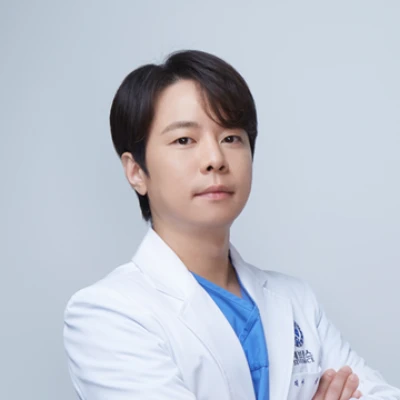
NUWA Clinic Gangnam
Dermatology · Lead Director, NUWA Clinic Gangnam
With know-how built over 10 years and more than 120,000 procedures, I'll help you find the answer to your facial concerns.