
Firm to the Touch, Yet the Contour Has Blurred
Surface resilience comes from the dermis; holding the facial line is the work of the fibrous septa beneath. NUWA Clinic Gangnam on how Xerf divides the two layers.
Contents
Sometimes the skin still feels firm to the touch, yet the jawline in the mirror looks blunt and the cheeks seem to have slid downwards.
Pinch the skin between your fingers and it seems fine, but the facial contour alone has blurred. There is a reason these two do not move together. Today we will set that reason out layer by layer.
Surface resilience and sagging of the facial contour are changes occurring in different layers. The springiness you feel to the touch is determined by collagen density in the dermal layer, while holding the facial line in place is the work of the fibrous septa and subcutaneous tissue layer far beneath it. So even where dermal resilience remains, the deeper supporting structure loosening first can leave the skin firm on the surface while the contour alone blurs.
Why are skin resilience and sagging separate?
The skin is made up of several layers, each with its own role. Distinguishing just two of them explains the reason.
| Layer | Its role | When it loosens |
|---|---|---|
| Dermal layer | Dense in collagen and elastin, responsible for surface resilience | The skin feels dull to the touch and fine lines increase |
| Fibrous septa and subcutaneous tissue layer | Wraps the fat and anchors the skin towards the bone structure | Cheek tissue slides down and the jawline blurs |
The fibrous septa wrap the fat within the subcutaneous tissue and hold the skin towards the bone structure. When this structure stretches, the contour descends regardless of surface resilience.
Why isn’t surface-only lifting enough?
Where heat is delivered only to the upper dermis, the surface is refined but the descended cheek tissue and blurred jawline remain as they were. The energy did not reach the layer where the cause sits.
Treat only the deep layer, conversely, and fine lines and surface texture are passed over untouched. Since both concerns are often present at once, choosing only one side becomes difficult. To put it another way, a disappointing lifting result often comes not from weak energy but from treating a layer other than the one causing the problem.
How does Xerf handle the two layers?
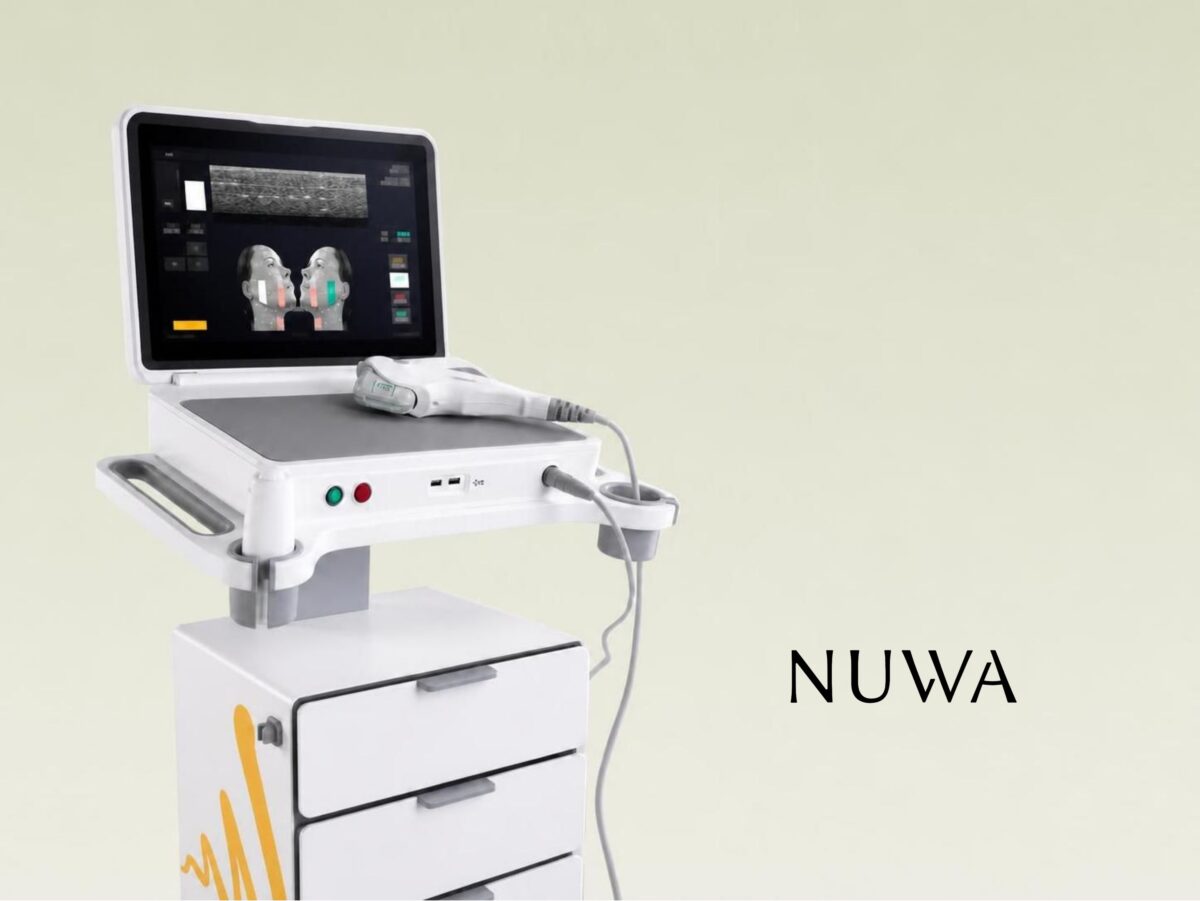
Xerf (XERF) is a device that combines two monopolar radiofrequency wavelengths, 6.78MHz and 2MHz, in its output. Each wavelength reaches a different depth, which allows the layers to be approached separately.
6.78MHz delivers heat to the upper and middle dermis, prompting loosened collagen to contract and taking on surface tightening. 2MHz penetrates to the deeper subcutaneous fat layer, working to contract the stretched supporting structures. Where surface resilience is holding but only the deeper layer has descended, the weighting shifts towards 2MHz. In the opposite case, the balance changes accordingly.
In other words, the two wavelengths differ not in intensity but in the depth they reach, and how that balance is divided is what proper treatment planning amounts to.
Why does parameter planning differ from person to person?
The amount of cheek fat, the bone structure and the angle at which deep supporting tissue has descended all differ from person to person. Proceeding on a uniform shot count without assessing facial structure leaves one layer excessive and another insufficient.
At NUWA Clinic Gangnam, we establish which layer the sagging began in and then divide the target energy according to the contours of the face. To sum up, even with the same Xerf, the character of the treatment changes depending on whether the weight falls on the dermal layer or the subcutaneous tissue layer.
What should be observed afterwards?
Xerf is a non-invasive method that leaves no scabbing or wound on the skin surface, so the return to daily life is quick. Heat has accumulated in the deeper layers, though, so it is worth taking care for a few days.
- Redness, mild swelling and a faint feeling of warmth may remain straight afterwards, usually easing within a few hours to a few days.
- While redness remains, wash gently with lukewarm water rather than hot water in the shower or at the basin.
- For about a week, avoid irritating care such as peels and scrubs.
- Keep up with sun protection and moisturising cream when going out.
The principle of aftercare is to add no further stimulation while the accumulated heat turns into remodelling.
If the surface seems fine but the contour alone has blurred, refining the surface is unlikely to change much. Establishing which layer the sagging began in is the place to start. You can see how the options compare in our lifting guide, and we will go through it together at the consultation.
Healthy, resilient skin comes together when accurate information and consistent care are added to the treatment itself. NUWA Clinic Gangnam, which proposes a direction suited to your skin through one-to-one diagnosis, is located directly in front of Exit 7 of Gangnam Station, on the 3rd and 4th floors at 385 Gangnam-daero, Seocho-gu, Seoul.
Frequently asked questions
Q. My skin is firm, so why does it look like it is sagging?
A. Resilience to the touch comes from the dermal layer, while holding the facial line is the work of the deeper fibrous septa and subcutaneous tissue layer. Even with dermal density intact, the deeper supporting structure loosening first leaves the surface firm while the contour alone has descended.
Q. What kind of treatment is Xerf?
A. It is a dual monopolar radiofrequency device that combines two wavelengths, 6.78MHz and 2MHz, in its output. Each wavelength reaches a different depth, which allows the dermal layer and the deeper subcutaneous tissue layer to be approached separately.
Q. Do both wavelengths have to be used?
A. The balance changes according to which layer the sagging began in. Where surface resilience is holding but only the contour has descended, the weighting shifts towards 2MHz, which handles the deeper layer.
Q. Is the treatment hot or painful?
A. Cooling gas is sprayed immediately before and after each shot to lower the temperature of the epidermis, so discomfort tends to be limited. How much is felt varies from person to person, and adjustments can be made as we go.
Q. When do the changes start to show?
A. A change from collagen contraction may be felt straight afterwards, while remodelling of the supporting structures continues over the following months. The timing and degree vary from person to person with age and skin condition.
Q. Can I have it with little cheek fat?
A. Yes, though delivering strong energy to the deeper layer without care can cause hollowing. In that case the weighting shifts towards the dermal layer, so please let us check your volume together at the consultation.

NUWA Clinic Gangnam
Dermatology · Lead Director, NUWA Clinic Gangnam
With know-how built over 10 years and more than 120,000 procedures, I'll help you find the answer to your facial concerns.