
Thermage: Why the Plan Starts from Skin Thickness, Not Age

Thin skin shows fine lines; thick skin shows descended contours. NUWA Clinic Gangnam on how Thermage FLX sets depth and output differently for each.
Contents
Skin ageing comes to everyone, but the way it shows differs from person to person.
For some, fine lines set in first and the surface becomes crepey; for others, the contours loosen and slide downwards before any wrinkles appear. Why does it differ? Today we will set out where that difference comes from, and how treatment planning changes accordingly.
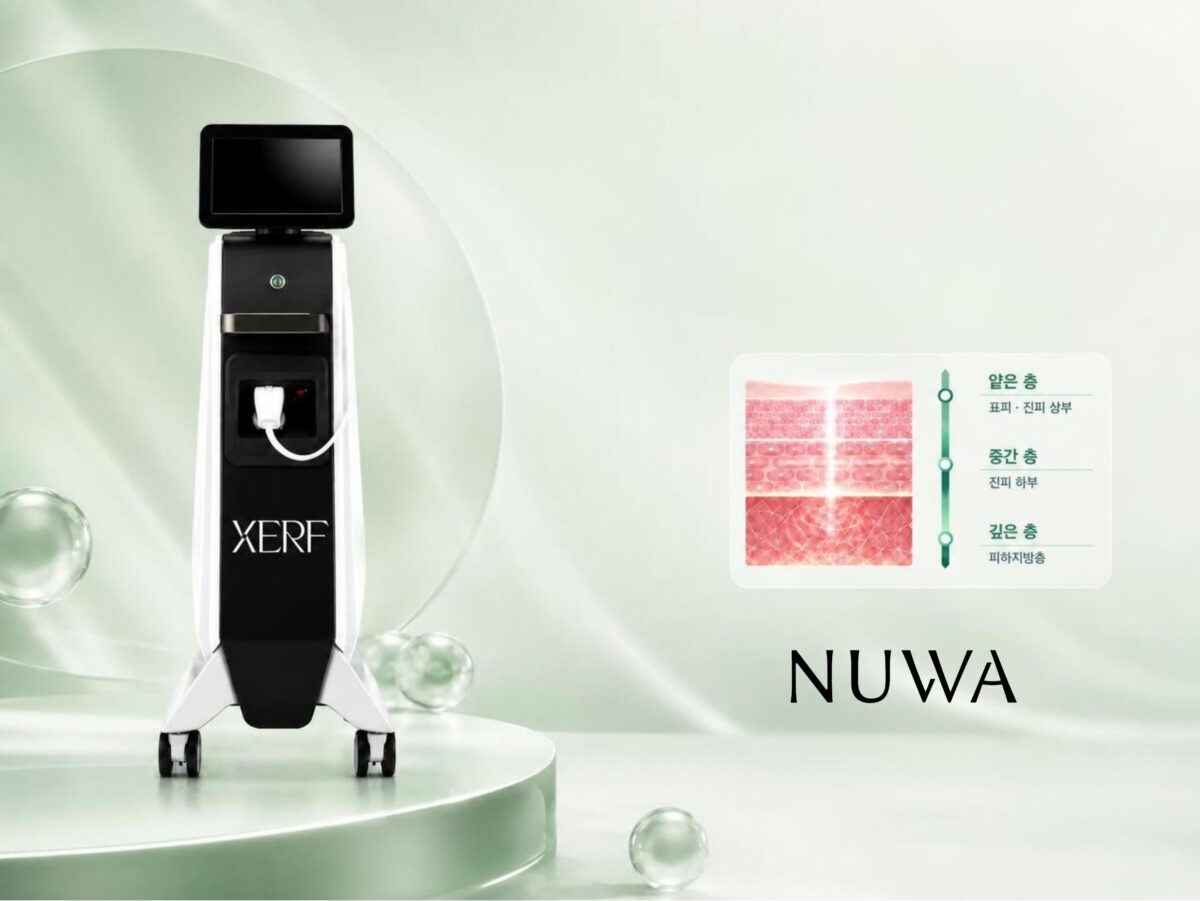
Behind the different patterns of ageing lie differences in dermal thickness and tissue density. Where the skin is on the thin side, it tends to show as fine lines and a loss of density; where it is thick with developed subcutaneous tissue, it more often shows as sagging and blunted contours. Thermage FLX sets penetration depth and thermal output differently according to that difference, which is to say that energy is designed and applied differently for every skin.
How does Thermage work?
Collagen fibres are the support structure that maintains the resilience of the skin.
With age, this elastic network gradually thins and breaks, losing its elasticity. Thermage FLX delivers 6.78MHz radiofrequency thermal energy into the dermal layer without damaging the epidermis, prompting the slackened collagen fibres to contract.
Over the following months, new collagen is produced and the density of the dermal layer is filled in again. How much you notice, and when, varies from person to person, but Thermage FLX is closer to a tightening method than to a treatment that pulls the skin.
Why do the patterns of ageing differ?
Because dermal thickness and tissue density differ from person to person.
Where the skin is thin, changes at the surface catch the eye first. Where the skin is thick with developed subcutaneous tissue, its weight means the change proceeds as contours being pushed downwards. So even with the same thermal energy, a difference in thickness changes the depth reached and the way it acts. Proceeding on the same settings can leave one side insufficient and the other excessive.
The pattern of ageing is determined in large part by dermal thickness rather than age, and this is why treatment planning starts from thickness rather than age.
How is thin skin approached?
Where the skin is thin and there is little cheek fat, the response to thermal energy tends to be sensitive.
If excessive energy concentrates in a layer that is too deep, cheek hollowing or skin irritation can appear, so the work proceeds in the direction of gathering thermal output in the dermal layer of the skin. The weight falls on raising the density around the eyes, mouth and cheeks, where fine lines form readily, to refine the surface. With thin skin, what needs watching is less insufficient energy than treatment carried deeper than necessary.
How is thick skin approached?
Where the skin is thick and the contours have descended under the weight of the tissue, sufficient thermal output has to reach the lower dermis for a response to occur.
Here the approach is to build thermal output while accounting for skin impedance (resistance). Treating only the shallow layers tidies the surface but leaves the descended contour exactly as it was.
| Aspect | Thin skin | Thick skin |
|---|---|---|
| Changes that mainly appear | Fine lines, loss of density | Sagging, blunted contours |
| What to watch | Cheek hollowing where deep layers receive excessive energy | Insufficient result where only shallow layers are treated |
| Direction of planning | Thermal output concentrated in the dermal layer beneath the epidermis | Output accumulated as far as the lower dermis, accounting for resistance |
In other words, the two types differ not in intensity but in the layer being targeted.
Why does the tip need checking?
A Thermage tip is a single-use medical device that can be used only once.
Using a reprocessed or uncertified tip makes thermal output unstable, and problems such as burns or cheek hollowing may come with it. You are welcome to check the certification and the opening of the tip before the treatment, or to ask at the consultation. Checking that a tip is genuine is not an awkward request but a step you are perfectly entitled to take beforehand.
Who does this treatment suit?
- Those who feel their skin is gradually thinning and losing resilience from within
- Those who want a plan matched to their own skin thickness
- Those worried about cheek hollowing, looking for an approach that fills dermal density
- Those whose fine lines around the eyes and mouth have increased, so make-up sits badly
- Those who need to return to daily life without the burden of a recovery period
Thermage FLX suits those who want to fill in the density of thinned skin rather than lift sagging upwards. If your resilience no longer feels as it did, checking your own skin thickness and structure comes before following whatever treatment others are having. Only then does the plan you need fall into place with it. You can also compare the lifting options in our lifting guide, and we will go through it together at the consultation.
Frequently asked questions
Q. My skin is thin. Can I still have Thermage?
A. Yes, though the plan needs care. Excessive energy concentrated in deep layers can lead to cheek hollowing or skin irritation, so we control penetration depth and thermal transfer and work mainly in the dermal layer.
Q. How do I know whether my skin is thin or thick?
A. Looking in the mirror alone makes it difficult to judge. Whether fine lines catch the eye first, or whether the contours are descending, gives one clue, but thickness and density are best established by diagnosis.
Q. I am worried my cheeks will hollow after lifting.
A. Thermage FLX works in the direction of filling dermal density rather than contracting the fat layer. That said, energy applied to thin skin without regard to its conditions is a burden, so values are set after checking thickness.
Q. How do I check the tip is genuine?
A. A Thermage tip is a single-use medical device used on one person only. You are welcome to watch the tip being opened and check its certification before the treatment, or to ask at the consultation.
Q. How many sessions are needed?
A. Collagen remodelling continues over several months, so we decide the next point after following how things progress. The number needed varies with skin thickness and the stage of ageing, so we advise at the consultation.
Q. When do the changes start to show?
A. A firmer feel from collagen contraction may be noticeable straight afterwards, while new collagen formation continues over the following months. When and how much you notice varies from person to person.
*Effects and results of this treatment may vary with individual condition, and responses such as redness, swelling or warmth may appear afterwards. Accurate diagnosis and the decision on whether to proceed should be made through consultation with the medical team.

NUWA Clinic Gangnam
Dermatology · Lead Director, NUWA Clinic Gangnam
With know-how built over 10 years and more than 120,000 procedures, I'll help you find the answer to your facial concerns.