
Titanium Lifting: How STACK and SHR Modes Are Divided by Area
STACK mode gathers energy into the retaining ligament layer; SHR mode fills the surface evenly. NUWA Clinic Gangnam on how the two are distributed by area.
Contents
There are moments in front of the mirror when a collapsed jawline, blunted deep cheeks or unusually deep nasolabial folds catch your eye. These areas may all look like the same problem, but they sit in different layers. So even with the same device, the approach differs by area. Today we will set out where and how Titanium Lifting is used.
Titanium Lifting uses different modes by area. Where sagging is pronounced, such as the nasolabial folds, deep cheeks and jawline, STACK mode gathers energy into the deeper layers; where the surface needs to be treated evenly, such as for skin tone and pores, SHR mode delivers energy in a broad, continuous sweep. What is settled at the consultation, then, is not whether to have the treatment but how the two modes are distributed.
How is the mode decided?
Retaining ligaments are the structures that hold the skin and tissue and anchor them towards the bone.
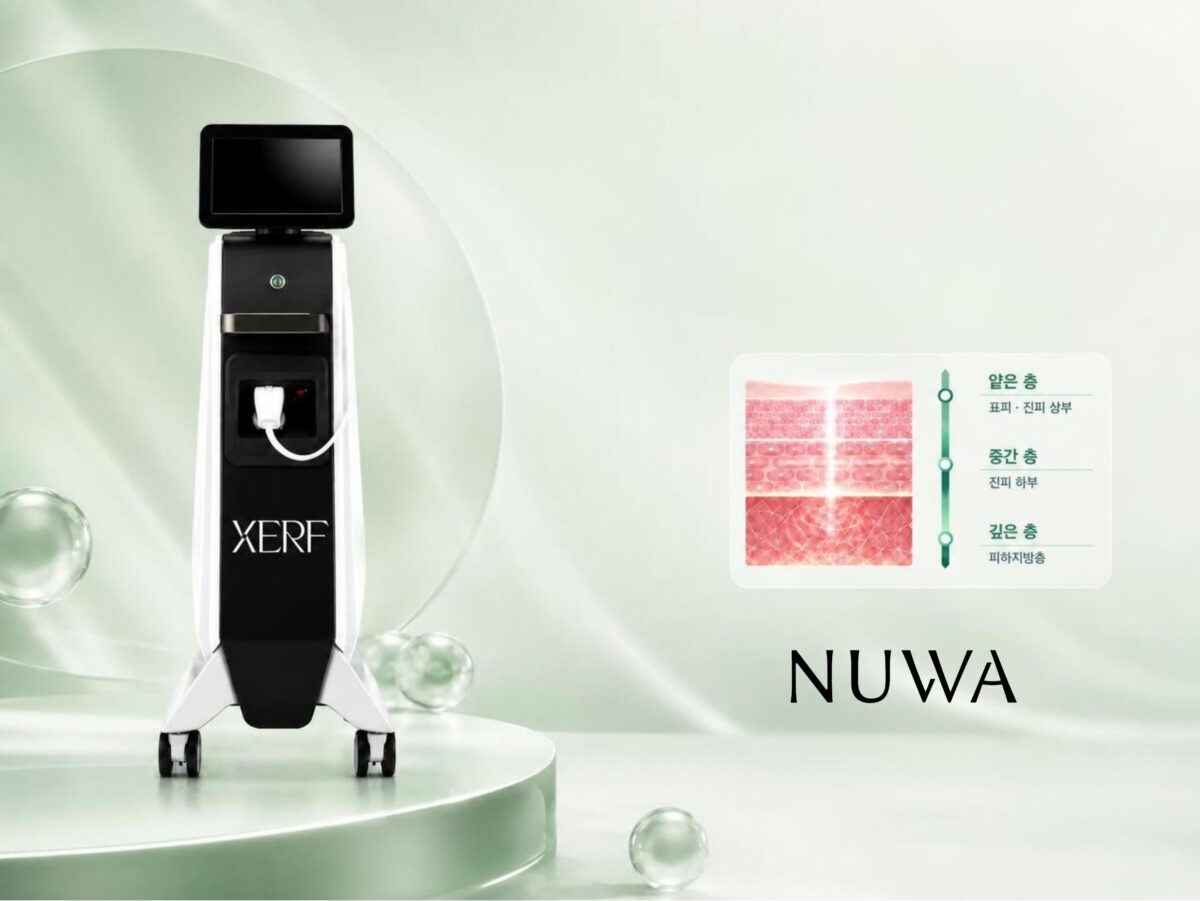
The face is made up of layers: the epidermis, the upper and lower dermis, and the retaining ligament layer deeper still. When this supporting structure loosens, the tissue above descends, so the nasolabial folds deepen and the deep cheeks begin to look blunted.
Titanium Lifting delivers 755nm, 810nm and 1064nm together, each with a different penetration depth, so that everything from the epidermis to the retaining ligament layer can be approached separately. Of these, 1064nm takes on the deepest layer. The mode is selected according to which area the sagging sits in.
How are the nasolabial folds and deep cheeks approached?
STACK mode is used where sagging is pronounced. STACK mode gathers and accumulates energy in one place across the deeper retaining ligaments and fascia, and is applied to areas where tissue has settled downwards — the nasolabial folds, deep cheeks and jawline — to tidy the line.
That said, even with the same nasolabial fold, the approach changes if the cause is loss of volume. So rather than choosing a mode by area alone, an analysis of the skin problem has to come first. In other words, STACK mode suits areas where deep-layer tissue has descended, but those areas have to be distinguished from ones where hollowing is the cause.
Which mode is used for skin tone and pores?
SHR mode is used where the skin surface needs to be treated evenly.
SHR mode keeps the tip in close contact with the skin and builds energy through continuous sliding. Heat is delivered evenly across the whole dermis, prompting collagen synthesis and working in the direction of refining surface texture and pores. Because 755nm is a wavelength that responds to melanin pigment, some evening of the complexion can also be expected in this process. How much you notice does vary from person to person. Put simply, SHR mode is not a method that pulls at one point but one that fills a broad area evenly.
How does it break down by area?
| Area and concern | Mode mainly used | Layer involved |
|---|---|---|
| Nasolabial folds, deep cheeks | STACK | Retaining ligament and fascial layer |
| Jawline, double chin | STACK | Retaining ligament and fascial layer |
| Pores, fine lines | SHR | Mid-dermis |
| Dull complexion | SHR | Epidermis and upper dermis |
Both modes are used together within one face in most cases, so which side carries more weight is decided after checking fat volume and skin thickness.
How much discomfort is involved?
Sapphire contact cooling is built into the end of the delivery tip. At the moment the laser energy penetrates, the tip surface holds at minus three degrees or below and cools the epidermis. Because energy reaches the deeper layers while the surface is protected, the burden of heat tends to be limited.
How much is felt does vary from person to person. The discomfort is limited not because the energy has been lowered but because surface and deep temperatures are handled separately.
What is recovery like?
Titanium Lifting leaves no wound or scabbing on the skin surface, so washing your face and wearing make-up are possible straight afterwards. Slight redness or a feeling of warmth may remain immediately after the treatment, but it generally passes quickly. For about a week, please avoid saunas and steam rooms, and care that applies heat or irritation such as scrubs and peels.
If your jawline or nasolabial folds have been on your mind, establishing whether that area has descended or hollowed comes first. How much of each mode to use is decided after that. You can also compare the lifting options in our lifting guide, and we will go through it together at the consultation when you visit.
Frequently asked questions
Q. Does Titanium Lifting help with nasolabial folds?
A. Where they look deep because tissue has settled downwards, we approach with STACK mode. If the fold has formed through loss of volume, though, the direction changes, so establishing the cause comes first.
Q. Can I have only STACK or only SHR?
A. In most cases the two modes are divided across one face. Where sagging is the main concern the weighting shifts towards STACK; where texture and tone are the main concern it shifts towards SHR.
Q. What is the retaining ligament layer?
A. It is the structure that holds the skin and tissue and anchors them towards the bone. When it loosens, the tissue above descends, making the nasolabial folds and deep cheeks more pronounced.
Q. Is anaesthesia needed?
A. Sapphire contact cooling holds the tip at minus three degrees or below and cools the surface, so many people proceed without separate anaesthesia. How much is felt varies from person to person.
Q. Can pores and tone be addressed at the same time?
A. SHR mode delivers heat evenly across the whole dermis and works in the direction of refining the surface. Because 755nm responds to melanin pigment, some evening of the complexion can also be expected, with variation from person to person.
Q. Can I wear make-up straight afterwards?
A. The method leaves no wound on the surface, so yes, straight afterwards. For about a week, though, please avoid saunas and care that applies heat or irritation such as scrubs and peels.
*Effects and results of this treatment may vary with individual condition, and responses such as redness or warmth may appear afterwards. Accurate diagnosis and the decision on whether to proceed should be made through consultation with the medical team.

NUWA Clinic Gangnam
Dermatology · Lead Director, NUWA Clinic Gangnam
With know-how built over 10 years and more than 120,000 procedures, I'll help you find the answer to your facial concerns.