
Ultherapy PRIME: What to Know About Pain Beforehand
Pain in ultrasound lifting depends on skin thickness and distance to bone, not on treatment strength. NUWA Clinic Gangnam on why anaesthesia is not always needed.
Contents
Many people stop at the question of pain when looking into Ultherapy PRIME. It also has a reputation as a treatment you can only get through under sedation.
It would be difficult to say there is no pain at all. Knowing where it comes from and why, though, leaves quite a lot you can do about it. Today we will set that out.
Pain in ultrasound lifting arises as thermal coagulation points form within the tissue and that heat stimulates nerve cells and supporting tissue. This is why it is felt more strongly around the cheekbones and along the jawbone, where the skin is thin and close to bone. Enduring more does not make the result better, though. Checking the layers on real-time ultrasound imaging as energy is delivered reduces unnecessary stimulation, which is why some people go through it without anaesthesia.
Why does ultrasound lifting hurt?
Ultherapy PRIME focuses ultrasound energy on the SMAS (fascial) layer without damaging the skin surface. Fine thermal coagulation points are created within the tissue in order to contract what has loosened. The heat generated at that moment stimulates internal nerve cells and supporting tissue, producing a heavy or tingling sensation. Because it comes from inside rather than from the surface, it is different in character from a sharp, stinging pain.
To put it another way, a thermal coagulation point is the fine coagulation point created where ultrasound energy gathers to contract tissue, and the pain is a response that accompanies the forming of that point.
Are some areas particularly painful?
The sensation differs by area even within one face. The thinner the skin and the closer to bone, the stronger it feels.
| Area | Condition | Sensation |
|---|---|---|
| Around the cheekbones, jawbone line | Thin skin, close to bone | A heavy, resonating sensation tends to be stronger |
| Cheeks, double chin | Thick soft tissue and fat layer | Felt relatively gently |
The intensity of the pain is governed more by the skin thickness of that area and its distance to bone than by the strength of the treatment.
Does enduring more give a better result?
No. Some thermal stimulation is a natural response, but the size of the pain does not indicate the size of the result.
If anything, delivering energy without confirming the exact depth can send it into bone or stimulate the wrong layer, so that the pain increases while the target layer is not properly reached. Pain felt during the treatment is less a signal that energy went in well than a clue to which layer it reached.
Why can it be done without anaesthesia?
Skin thickness and fat volume differ from person to person, and differ considerably between areas within one face. Delivering energy without knowing those differences increases unnecessary stimulation.
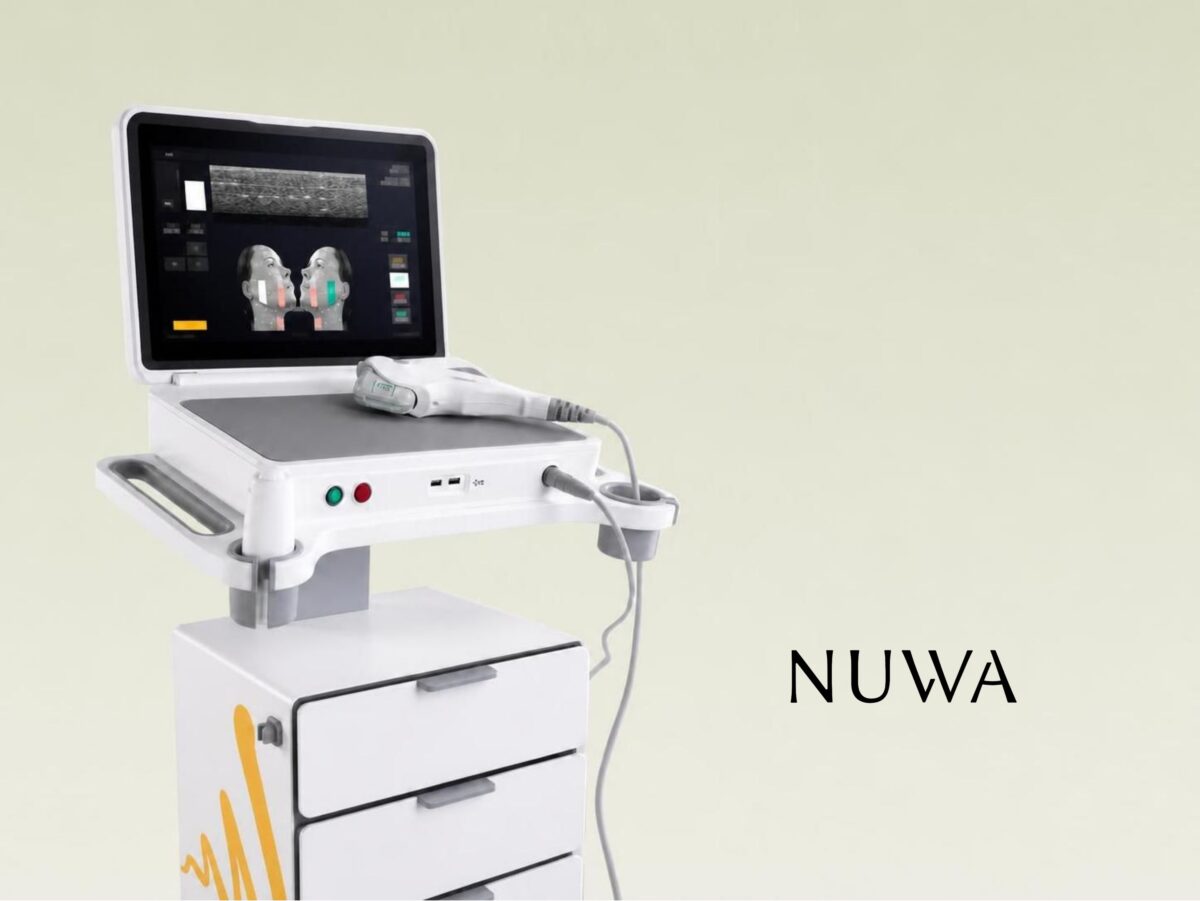
Ultherapy PRIME allows the skin layers to be checked on a monitor through real-time ultrasound imaging. Identifying the target layer visually while keeping the tip in close contact helps reduce stimulation that is not needed. Some people therefore go through it without anaesthesia, though how much is felt varies from person to person.
To sum up, the way to reduce pain is not to lower the energy but to have it reach only the layer that needs it, accurately.
What responses appear afterwards?
Because the method leaves no damage to the skin surface, you can return to daily life straight afterwards. Thermal coagulation points have formed deep within, though, so the following responses may appear for a few days.
- Redness, temporary swelling, and a dull ache like pressing on a bruise when touched
- These usually settle gradually within a few days to a few weeks, with the duration varying from person to person
- On the day itself, please avoid saunas and steam rooms, vigorous exercise and alcohol
- Keep up with moisturising and sun protection throughout the recovery period
The dull ache afterwards is part of the process of the thermal coagulation points settling, so what to go by is duration rather than whether symptoms are present at all. If symptoms worsen or persist, please contact the clinic rather than judging for yourself.
Who might Ultherapy PRIME be recommended to?
- Those who have hesitated because of pain with previous ultrasound lifting
- Those concerned about hollowing, such as in the cheeks
- Those who want a natural facial line rather than an artificially pulled look
- Those bothered by sagging in specific areas such as the jawline or jowls
If fear of pain has kept you putting it off, looking at whether the method checks your skin layers as it goes comes before thinking about anaesthesia. Knowing which areas are how thin changes the plan. You can also compare it with the other lifting options in our lifting guide, and we will check it together at the consultation.
Healthy, resilient skin comes together when accurate information and consistent care are added to the treatment itself. NUWA Clinic Gangnam, which proposes a direction suited to your skin through one-to-one diagnosis, is located directly in front of Exit 7 of Gangnam Station, on the 3rd and 4th floors at 385 Gangnam-daero, Seocho-gu, Seoul.
Frequently asked questions
Q. Is sedation essential for Ultherapy?
A. It is not essential. Checking the layers on real-time ultrasound imaging as energy is delivered reduces unnecessary stimulation, so some people go through it without anaesthesia. How much pain is felt varies from person to person, so it can be decided together at the consultation.
Q. Which area hurts the most?
A. It tends to be felt strongly around the cheekbones and along the jawbone, where the skin is thin and close to bone. The cheeks and the area under the chin, with thicker soft tissue and fat, are felt relatively gently.
Q. Does more pain mean a better result?
A. No. The size of the pain does not indicate the size of the result. Delivering energy without confirming depth can increase pain while still not reaching the target layer properly, so enduring it is not the answer.
Q. Can I say something if it hurts during the treatment?
A. Yes, adjustments can be made as we go, so please tell us. Where you felt it strongly can itself be a clue for checking the layers again.
Q. How long does the dull ache last?
A. An ache like pressing on a bruise may remain, usually settling within a few days to a few weeks. The duration varies from person to person, and if it worsens or lasts a long time, please contact the clinic.
Q. Can I go about my day straight afterwards?
A. The method leaves no damage to the skin surface, so returning to daily life is possible. On the day itself, though, it is best to avoid saunas and steam rooms, vigorous exercise and alcohol.

NUWA Clinic Gangnam
Dermatology · Lead Director, NUWA Clinic Gangnam
With know-how built over 10 years and more than 120,000 procedures, I'll help you find the answer to your facial concerns.