
Titanium Lifting: Managing Firmness and Tone Together

Titanium Lifting in the Gangnam Station area: how three wavelengths reach different depths, what STACK and SHR modes each do, and why energy design matters.
Contents
Many people considering lifting because of fine lines and a sagging facial line say the reason they cannot bring themselves to step into a clinic is the burden of discomfort. Ultrasound (HIFU) and radiofrequency (RF) lifting form coagulation points at deep target layers within the skin, so they can be accompanied by a sharp or aching sensation.
This time we will look at Titanium Lifting at a dermatology clinic in the Gangnam Station area, which can resolve this concern to some degree. We will set out why discomfort is limited, and the principle by which skin tone that has become dull and uneven can be managed alongside lifting, addressing both firmness and tone at once.
How does Titanium Lifting act within the skin?
The core principle of Titanium Lifting lies in emitting three wavelengths — 755nm, 810nm and 1064nm — at the same time, based on Soprano Titanium technology. A method using a single wavelength concentrates on one particular depth, but when three wavelengths enter together the layers they reach differ.
Energy is delivered by depth, from the epidermis to the dermis where collagen and elastin fibres are distributed, and on to the SMAS (fascial) layer and retaining ligaments that support the facial contour from below. Deep fascial tissue responds to the thermal stimulus and contracts, elastic fibre regeneration in the dermis is induced, and the process of melanin pigment near the epidermis breaking down gently takes place alongside.
The reason Titanium Lifting can address firmness and tone together is not that it has many functions, but that wavelengths responding at different depths act at the same time.
Is discomfort with Titanium limited?
One thing those choosing Titanium Lifting mention often is that discomfort is limited. However much improvement a device may allow, if the treatment process is hard it becomes difficult to continue with care, so this is an important factor from the point of view of sustainability too.
The Titanium Lifting device carries a sapphire contact cooling system that protects the epidermis. Even at the moment energy penetrates into the skin, it keeps the temperature of the handpiece tip touching the skin surface at −3°C or below. As the skin surface is cooled instantaneously, the transmission of discomfort is reduced. That said, how much is felt differs individually.
In other words, the light burden of discomfort is not because the energy is delivered weakly, but because energy is delivered to the deep layers with the surface kept cooled.
How do STACK mode and SHR mode differ?
Titanium Lifting is carried out by combining delivery modes differently to match the characteristics of each concern. The two principal modes are STACK mode and SHR mode.
STACK mode — deep-layer target contour lifting
This mode accumulates energy rapidly in the deep fascial layer and retaining ligament areas. As the loosened supporting structure undergoes thermal contraction, it can help tidy a blunted jawline, a double chin and a sagging marionette line. It is a method weighted towards contour improvement and contouring.
SHR mode — whole-face tightening and tone management
This mode uses the 755nm wavelength to deliver energy widely and evenly to the dermis and epidermal areas. It refines rough texture at the skin surface and lowers pigment density to clear the complexion, and overall firmness management, pores and skin regeneration can be expected alongside.
The two modes are not a matter of superiority but a difference in the depth targeted. In most cases the proportions are combined to match each concern rather than using only one.
What characterises each Titanium mode?
| Category | STACK mode | SHR mode |
|---|---|---|
| Main target layer | SMAS (fascial) layer, retaining ligaments | Epidermis, upper dermis |
| Delivery method | Accumulating energy in one area | Repeated delivery, widely and evenly |
| Concerns mainly addressed | Jawline, double chin, marionette line | Skin texture, pigment density, pores |
| Expected direction | Refining the contour line | Refining tone and texture, overall firmness |
As the character of the treatment differs according to which modes are used in what proportion even with the same device, it is better to check the content of the design rather than the name of the device.
Why is Titanium energy design needed?
However good the performance of the device, treating with a uniform shot count without grasping the characteristics of the individual facial shape can make it difficult to reach the result hoped for.
Applying a deep-layer mode excessively to someone with little cheek volume and thin skin can be accompanied by cheek hollowing or sinking, while conversely using a weak mode on a double chin or an area with thick fat can leave contour improvement disappointing to the touch. NUWA Clinic therefore aims at lifting designed to match the individual facial shape, rather than excessive energy delivery.
What creates the difference in result within the same treatment is not the total amount of energy but how much of it is divided into which layer.
What reactions can appear after Titanium treatment?
Titanium Lifting is a non-invasive method that does not wound the skin surface, so the return to daily life tends to be quick. That said, as the regenerative response proceeds within the skin, knowing in advance the reactions that can appear will help.
Temporary redness and a sensation of heat — Fine erythema or a warm sensation may remain right after treatment, and in most cases this eases within a few days.
Temporary tightness and mild tenderness — A tight feeling or mild tenderness may occasionally be felt; this is a reaction that can appear during collagen regeneration.
That said, if symptoms worsen or continue for a long time, please contact the clinic rather than judging on your own. Redness and tightness after treatment are generally part of the course, and the standard for judgement is the duration and degree rather than whether symptoms are present at all.
What should be observed after Titanium treatment?
The skin can become somewhat dry during the process of regeneration. Apply moisturising cream generously to help the barrier recover, and use sunscreen thoroughly when going out. After treatment it matters not to add external stimulus during the period in which the delivered thermal energy leads into regeneration. Please avoid skin care involving high heat, saunas and steam rooms, and care that irritates the epidermis such as scrubs and peels.
If you would like to manage contour and skin tone together while reducing the burden of discomfort, Titanium Lifting is worth considering. That said, the suitable mode and energy differ according to skin thickness and the degree of sagging, so we recommend confirming your condition through a consultation first.
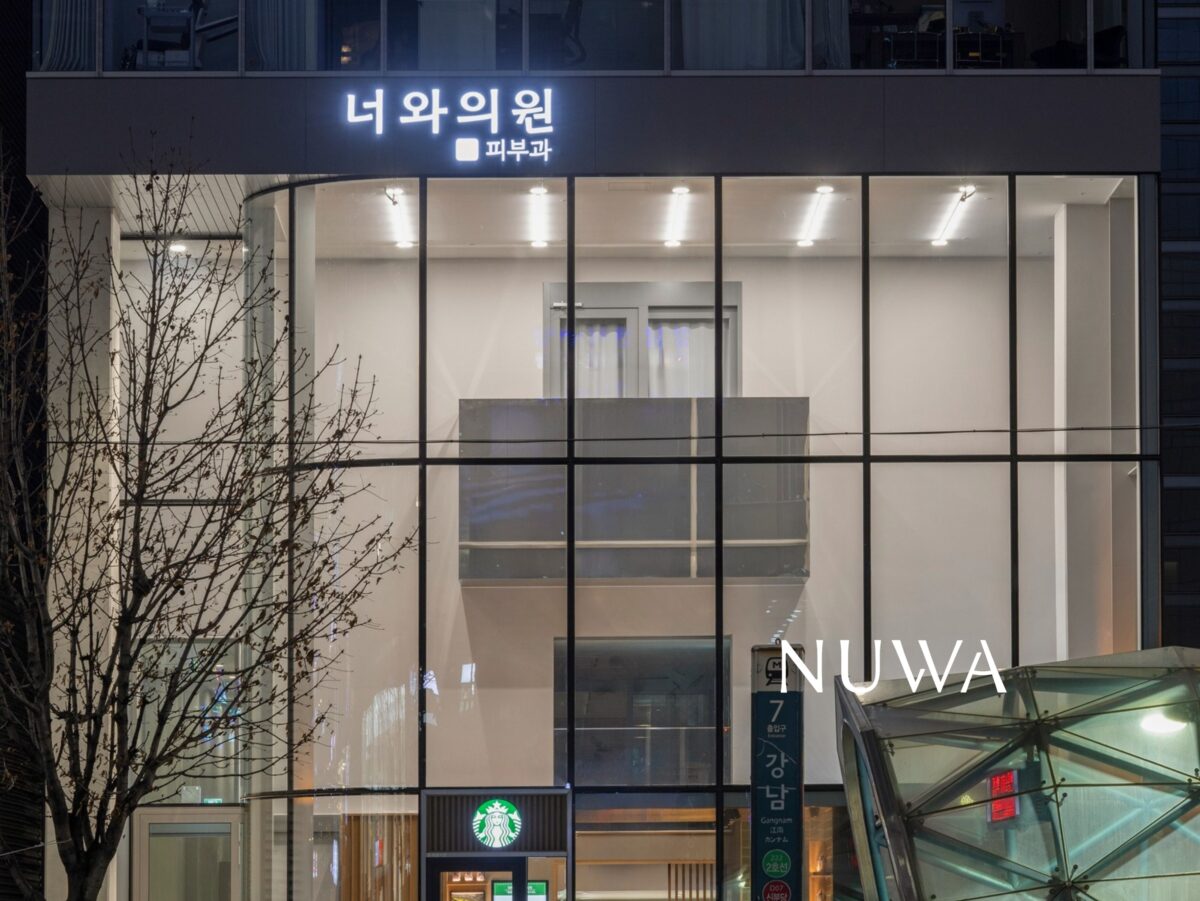
Healthy, resilient skin is completed not by a treatment on its own, but when accurate information is combined with consistent day-to-day care. NUWA Clinic Gangnam, where facial shape concerns are assessed first, is located directly in front of Exit 7 of Gangnam Station, on floors 3 and 4 at 385 Gangnam-daero, Seocho-gu, Seoul.
Frequently asked questions
Q. Is discomfort with Titanium Lifting limited?
A. The sapphire contact cooling system keeps the handpiece tip at −3°C or below and cools the skin surface, so the transmission of discomfort tends to be reduced. That said, how much is felt differs individually.
Q. Can Titanium do lifting and tone improvement at the same time?
A. As the 755nm, 810nm and 1064nm wavelengths act at different depths from the epidermis to the fascial layer, firmness and tone can be addressed together. That said, which is weighted more is adjusted by the combination of modes, and the degree felt differs individually.
Q. Do I have to choose only one Titanium mode?
A. In most cases the two modes are combined rather than using only one. Where the focus is the jawline and double chin the STACK proportion rises; where it is texture and tone, the SHR proportion rises.
Q. Can I have Titanium if my skin is thin and I have little cheek volume?
A. It is possible, but applying a deep-layer mode excessively can be accompanied by cheek hollowing or sinking, so care is needed in the design. The mode and energy are adjusted after checking skin thickness and fat volume.
Q. When can I return to daily life after Titanium treatment?
A. As it is a non-invasive method that does not wound the skin surface, the return to daily life tends to be quick. That said, for a week it is best to avoid care that applies heat and irritation, such as saunas, steam rooms, scrubs and peels.

NUWA Clinic Gangnam
Dermatology · Lead Director, NUWA Clinic Gangnam
With know-how built over 10 years and more than 120,000 procedures, I'll help you find the answer to your facial concerns.